GKT Pay-Per-Use: Flexible Financing for Plants in Dynamic Markets
In economically challenging times, the need for flexibility, balance sheet-neutral investments, and lower interest charges increases. At the same time, the Internet of Things (IoT) opens up the opportunity to reduce the investment risk for plant operators with pay-per-use services. In order to take this potential into account and provide customers with greater flexibility, GKT offers financing solutions that can be variably adapted to plant utilization and thus facilitate investment decisions.
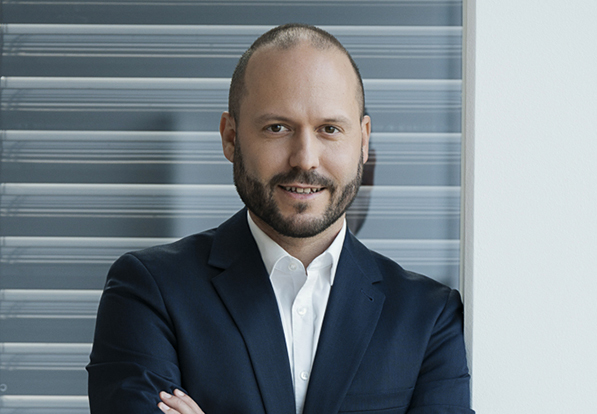
Andreas Schnitzhofer, Managing Director at GKT, stresses the company’s clear focus on supporting customers and partners with forward-looking concepts:

Photo: @ Winterleitner
“In an era characterized by flexibility and efficiency, we at GKT have a clear vision: to support our customers and partners with innovative solutions that revolutionize the operation of production facilities. With a proud passion and a firm eye on the future, we have identified pay-per-use as a catalyst for success – a model that not only transforms the way we operate plants, but also drives sustainable growth and resource optimization.”
Andreas Schnitzhofer
Managing Director, GKT
1. IIoT platform as a central component of pay-per-use
Technological progress in the context of Industry 4.0 not only has an impact on production plants, but also on plant financing in particular. Only through the integration of Industry 4.0 concepts is sufficient data now available to effectively implement pay-per-use (PPU) models.
This is because the data collected can be used not only to analyze the operating parameters, but also to calculate flexible repayment rates based on usage.
The basis for pay-per-use is the networking of the systems with an IIoT (Industrial Internet of Things) platform, which acts as the digital backbone. It enables previously agreed parameters to be recorded in order to carry out precise billing based on actual usage.
Instead of paying fixed monthly installments, the calculation is based on the effective duration of use, the production volume, or other measurable key figures.
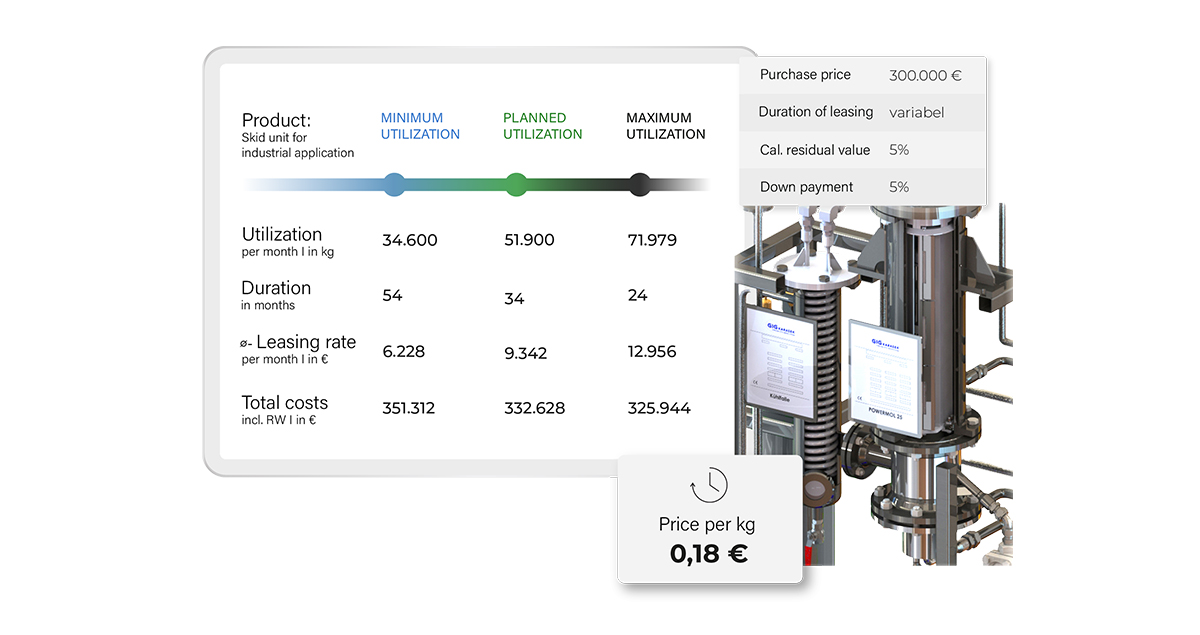
Figure 1: PPU example of a skid system for industrial use.
Photo: © Findustrial
The current focus of GKT´s PPU solutions is primarily on mini-plants. Of course, we are also open to taking on larger projects, but these require more detailed planning.
2. PPU: Low utilization = low repayment rates
For companies in volatile markets, paying off traditional loans for the purchase of machinery and equipment can quickly become a major burden, especially if capacity utilization is lower than planned.
To minimize this risk, in addition to traditional financing with fixed instalments, GKT is offering its customers two flexible financing options: sales financing and equipment as a service (EaaS). If the utilization rate is low, the amount of the repayment instalments decreases. If usage increases again, the repayment installments rise in parallel.
Financing is provided by a financing service provider (sales financing) or GKT itself (EaaS). The specific structure of the financing solution is customized according to the customer’s requirements.
GKT cooperates with the Austrian company Findustrial to ensure the smooth automated billing of pay-per-use financing. Efficient processing via the Findustrial platform ensures professional implementation.
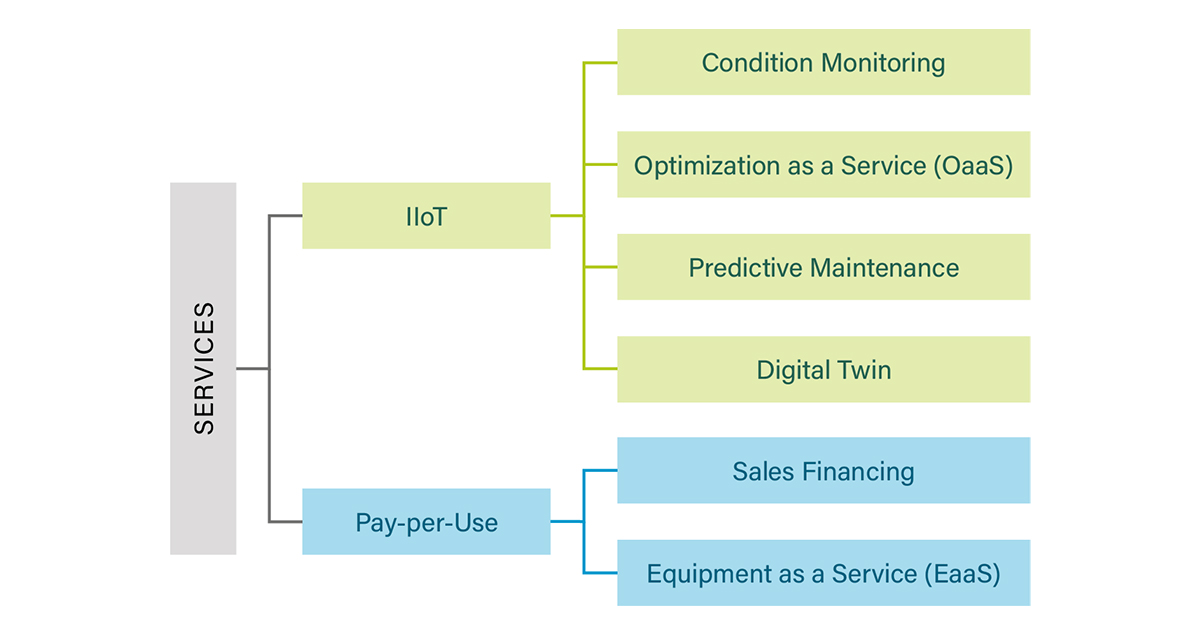
Figure 2: In addition to IIoT services, GKT offers pay-per-use financing solutions that can be customized according to the customer's requirements.
Photo: @ GKT
3. Sales financing Pay-per-use leasing with a flexible term
Under this model, a leasing company takes over the financing of the system. Ownership of the system remains with the financing partner until the end of the term. At the end of the term, you have the same options as with a conventional leasing contract.
3.1. Processing via the Findustrial platform
As a competent partner, Findustrial identifies the ideal financing partner, supports the implementation of the PPU project, and acts as a central interface between the financing partner, the customer, and GKT.
To enable real-time monitoring of usage of the system, the system is integrated into the Findustrial system. All data remains the property of the operator. The calculation of the usage-based leasing rate and repayment with the respective financing partner is fully automated. There is also the option of a service contract.
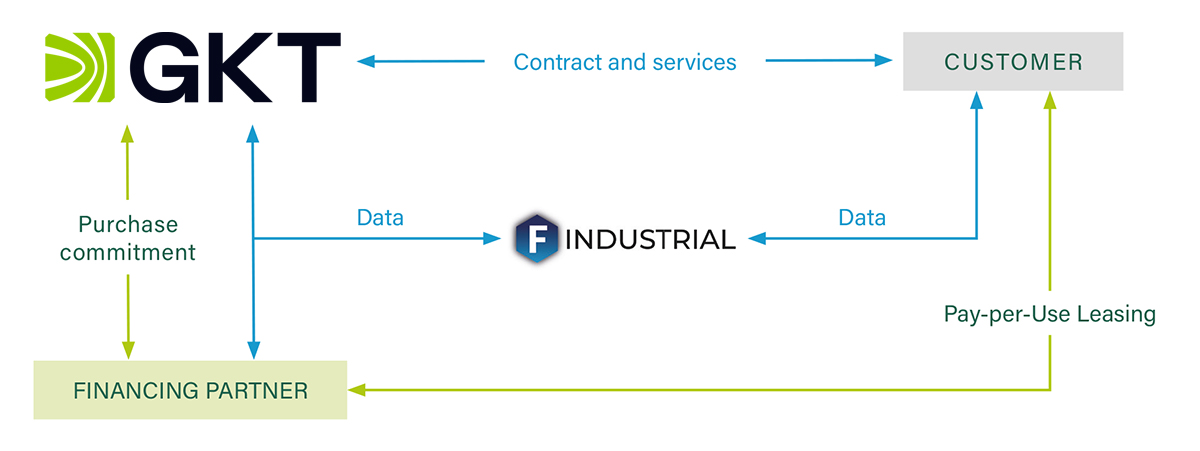
Figure 3: GKT first draws up an offer together with the customer and the Findustrial partner. After concluding the purchase contract, the customer concludes the PPU leasing contract with the financing partner. The financing partner places the order for the system and processes the payment for the system to GKT.
Photo: © GKT
3.2. Leasing rates within a defined flexibility corridor
Pay-per-use leasing is based on flexible leasing rates within a defined flexibility corridor:
- If less is produced, the leasing rate is automatically reduced to a fixed minimum.
- If the business volume and thus the utilization of the system increases, the leasing rates also increase automatically up to a defined maximum, without the need for discussions with banks, for example.
This means that the model allows the plant operator a high degree of flexibility with repayments and at the same time offers the financing partner a clear and comprehensible expectation of utilization by setting certain minimum and maximum limits.
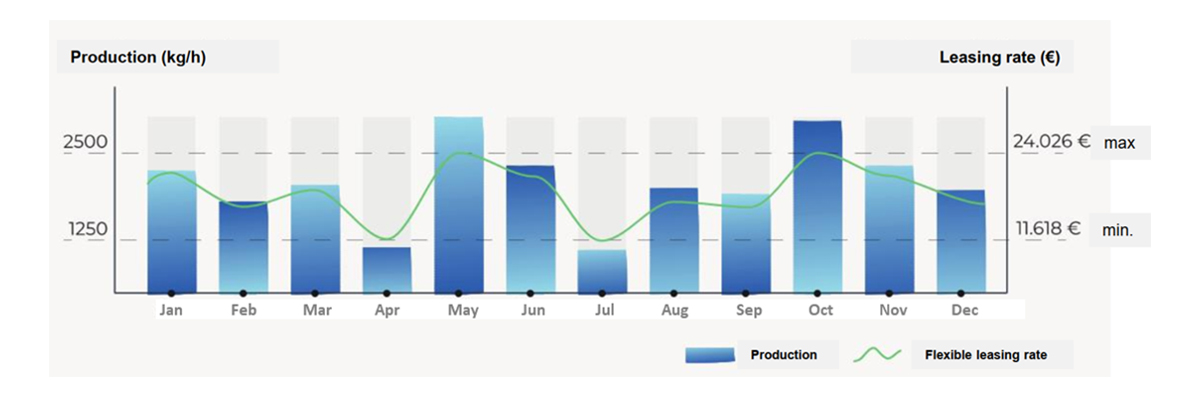
Figure 4: The flexibility corridor in this example is between 1,250 kg/h and 2,500 kg/h. If, for example, capacity utilization is significantly higher than originally planned after the start of the project, a higher monthly repayment up to the defined maximum of €24,026 is possible.
Photo: © Findustrial
3.3. The advantages of the sales financing leasing model
The major advantage of this financing solution is the variable term of the leasing contract, as the financing contract can be terminated earlier in the event of increased utilization. The leasing period is shortened accordingly and the interest burden is reduced. In addition, a higher level of repayment with correspondingly higher profits is tax deductible and has a big impact in good financial years.
Your benefits at a glance:
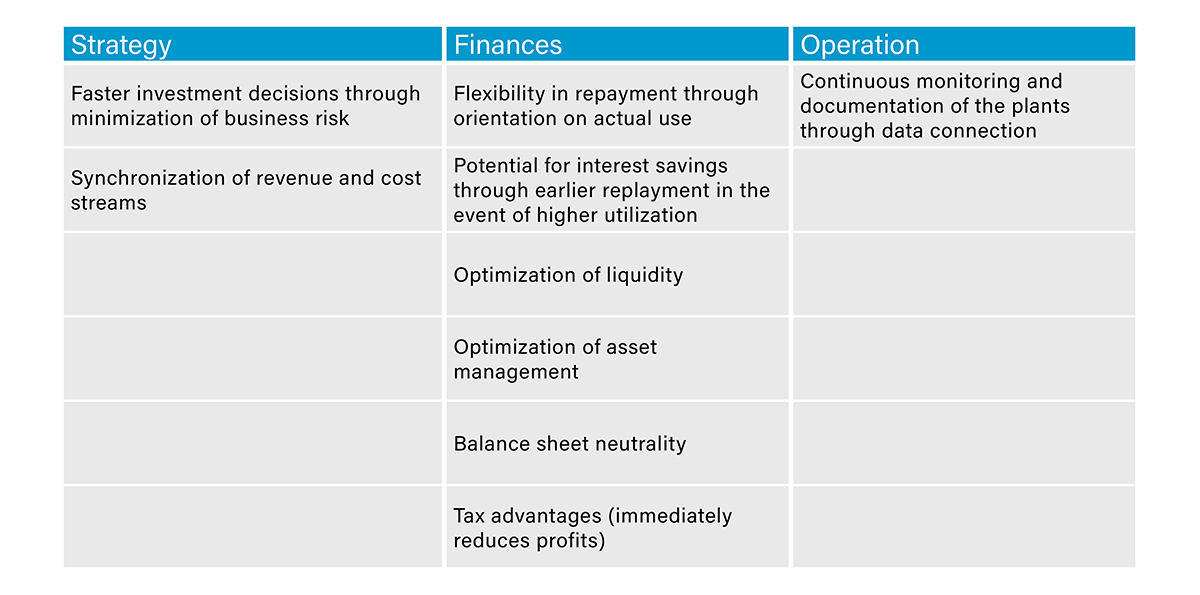
Figure 5: The advantages of the pay-per-use leasing financing model for plant operators.
Photo: © GKT
4. Equipment as a Service (EaaS): flexibility, including maintenance and service
In contrast to sales financing, the plant does not become the property of the financing company in the EaaS model. It remains the property of GKT and is provided to the plant operator for a fee according to the pay-per-use model. GKT assumes full responsibility for maintenance, service, repairs and the provision of spare parts and guarantees high system availability. The operator is spared the high capital expenditure and can pass on part of the operating risk to GKT .
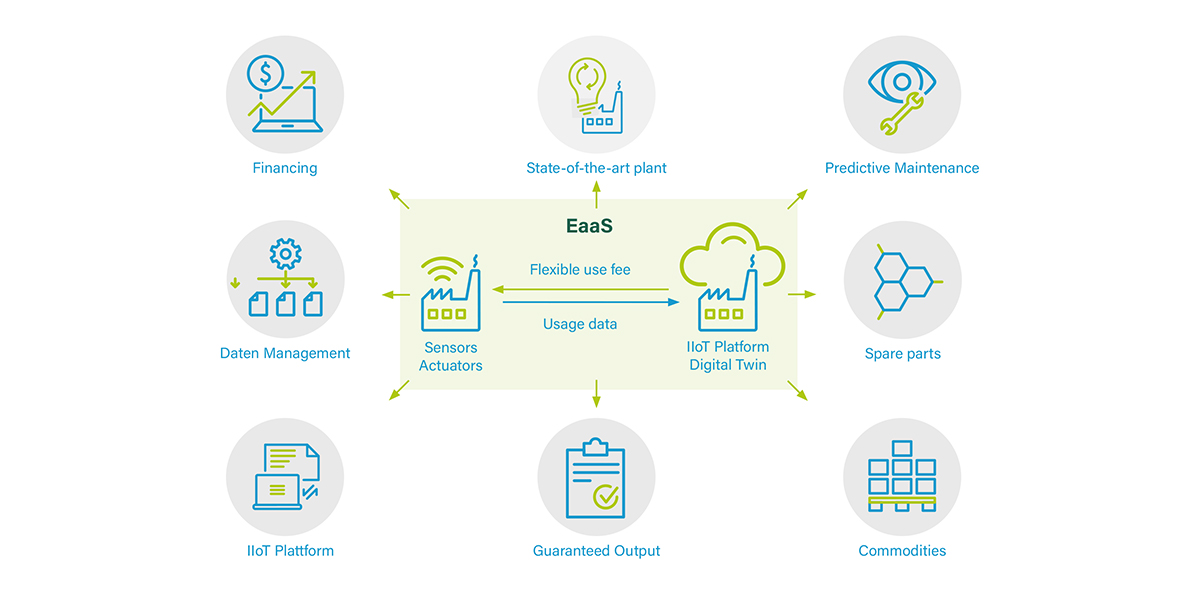
Figure 6: EaaS model for financing systems according to a flexible fee based on use. Sensors and actuators are used to precisely record the relevant usage data and calculate the usage fee based on this.
Photo: @ GKT
4.1. Integrating the system on the GKT IIoT platform
The system is integrated into the customer’s production process via the IIoT platform:
- As part of the check-out procedure at the GKT site, all relevant system parts are first documented with photos or logs, for example.
- The documentation is then uploaded to the digital twin, which is implemented on the IIoT platform.
- QR codes are affixed to clearly identify the equipment parts, for example on mechanical seals, drives, and other components.
- As soon as the equipment arrives at its destination, the plant operator scans all the QR codes with its smartphones in a predefined sequence to document and check all relevant information and upload it to the IIoT platform.
- This procedure means that all information on the equipment parts is available immediately.
- Potential transport damage or additional information can be recorded, tracked, and documented immediately.
Read our article to find out how the GKT IIoT platform works and what possibilities it offers “GKT embraces digitalization with an innovative IIoT platform.”
4.2. A digital twin creates the basis for the pay-per-use fee
A digital twin – a virtual representation of the physical plant – contains detailed information on usage duration, production volumes, and other measurable key figures. This data is used to precisely determine actual usage and automatically calculate and pay the pay-per-use fee via the Findustrial platform. In contrast to pay-per-use leasing, no minimum and maximum limits are relevant for EaaS.
The use of a digital twin is not mandatory as part of the EaaS model, but it does offer additional benefits. The Digital Twin monitors and analyzes the system status in real time, enabling maintenance and servicing to be optimized. Predictive analyses can also be used to identify potential bottlenecks or problems at an early stage and take appropriate measures to maximize the efficiency and availability of the system.
4.3. The most important advantages of EaaS
The key advantage of the EaaS model is that companies can access modern, high-performance facilities without having to make large capital investments or worry about long-term maintenance and spare parts procurement. It enables plant operators to optimize their financial obligations and focus their resources on their core business.
As maintenance and servicing are fully covered by GKT, operations become more efficient and budget gaps caused by repairs or production stoppages can be avoided. Furthermore, EaaS helps to mitigate the shortage of skilled workers by utilizing the expertise and resources of GKT. This takes the pressure off internal staff and allows companies to concentrate on their core competencies and critical tasks.
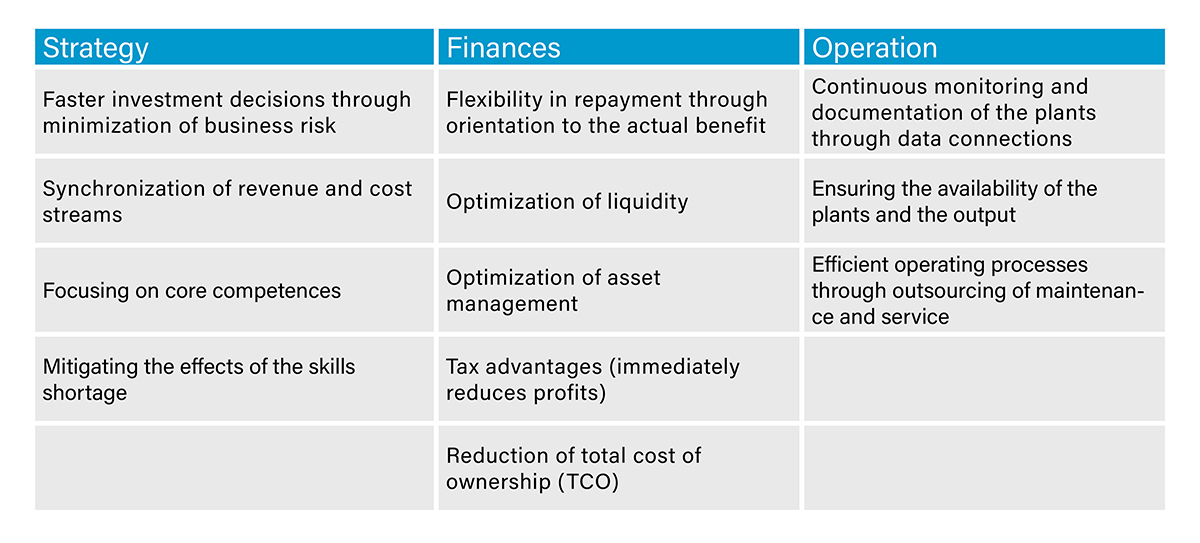
Figure 7: The EaaS model offers a comprehensive solution for plant operators that brings both financial and operational benefits.
Photo: © GKT
5. Conclusion: flexibility and liquidity in dynamic markets
The combination of Industry 4.0 technologies, usage-based billing and customized financing solutions offers plant operators greater flexibility, transparent cost structures, and optimal use of resources. Efficiency and competitiveness are increased, while financial burdens and operational risk are minimized. Similar to conventional leasing, the plant operator always works with the latest generation of devices and avoids tying up capital over the long term. Furthermore, no accounting is required for this financing model.