The New CO₂ Economy: CCU Technologies as Enablers of a Low-Carbon Future
In an era where the transition to a low-carbon economy is an urgent global priority, carbon capture and utilization (CCU) technologies are increasingly gaining attention from policymakers, businesses, and researchers. These promising solutions not only offer the potential to reduce CO2 emissions but also to utilize carbon as a resource, thereby contributing to the development of an efficient circular economy.
1. From focus on sequestration to effective carbon utilization
In the past, due to the technological challenges associated with CCU, policy efforts primarily focused on sequestration, where CO2 is captured and permanently stored by injecting it into geological formations (carbon capture and storage, CCS). However, there has been a noticeable shift in recent years towards policies that also promote and regulate the utilization of captured carbon. This shift highlights the ongoing technological advancements in CCU technologies and a broader recognition of their potential benefits.[1]
2. CCU is much more than a technology for carbon removal
Merely transitioning the energy system to sustainable sources is unlikely to be sufficient to achieve net-zero emissions by 2050. This is where CCU technologies come into play, with the potential not only to reduce emissions but also to lower raw material consumption and support the shift towards an efficient circular economy.
The focus of CCU technologies is to capture CO2 from industrial sources or directly from the atmosphere and use it as a substitute for fossil carbon in the production of valuable goods. These technologies offer a wide range of potential applications with significant market potential. They could help meet the ongoing demand for carbon in the production of chemicals, fuels, and polymers, thereby paving the way for a sustainable future [1]
A promising approach in this regard is electrochemical CO2 reduction.[2] Learn more about this topic in our detailed article “New technologies for converting CO2 and why GKT opts for electrochemical reduction“.
3. Economic boom in CO₂ utilization
The growing commitment to CO2 conversion technologies is reflected in the increasing amount of private and public funding directed toward companies in this sector. In 2022, global venture capital investments in companies focused on CO2 utilization amounted to nearly $500 million, representing about 20% of total venture capital investments in carbon capture, utilization, and storage (or CCUS).[3]
US companies dominate these investments, accounting for approximately 80% of the cumulative total from 2015 to 2022. While fuel production remains the leading application for large-scale capture facilities, investments are evenly distributed across various utilization types, with roughly one-third of total investments going to fuels, chemicals, and building materials, respectively.
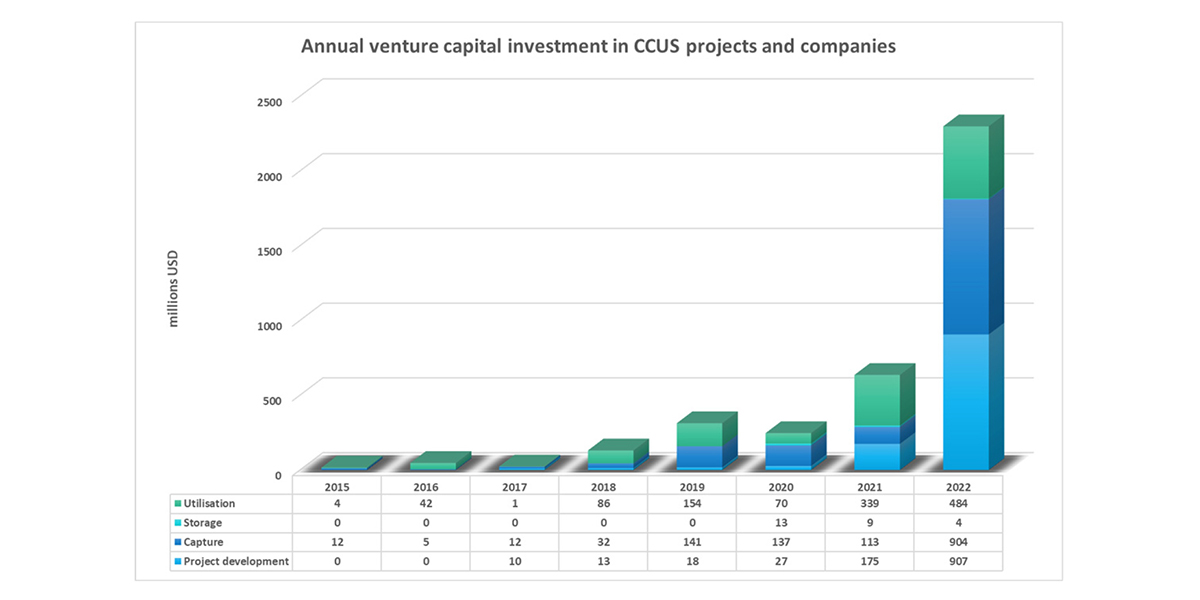
Figure 1: IEA (2023), Annual venture capital investment in CCUS projects and companies, 2015-2022, IEA, Paris https://www.iea.org/data-and-statistics/charts/annual-venture-capital-investment-in-ccus-projects-and-companies-2015-2022
Photo: © License: CC BY 4.0
4. Key factors for the successful implementation of CCU technologies
CO2 storage in underground rock formations or depleted oil and gas fields has not yet been fully researched. Concerns remain about long-term safety, particularly the potential for leaks that could release CO2 back into the atmosphere. Additionally, potential environmental risks, such as soil changes or impacts on groundwater, require further investigation.[4]
Given these uncertainties, CO2 utilization should be prioritized over CO2 storage. However, certain conditions must be met to successfully implement and scale CCU technologies:
4.1. Increasing the cost of CO₂ emissions
In many markets, the current cost of CO2 emissions is too low to drive significant investment in CCU by companies. Without higher CO2 pricing, there is insufficient economic incentive to introduce these technologies. Raising the price of CO2 could significantly enhance the economic viability of CCU and promote the widespread adoption of these technologies.[5]
4.2. Availability of CO₂ sources
The scalability of CCU technologies largely depends on the availability of sufficiently large and cost-effective CO2 sources, such as those from industrial processes or power plants where significant amounts of CO2 are emitted. To effectively tap into these sources, not only is an increase in the price of CO2 necessary, but also financial incentives and comprehensive measures aimed at reducing capture costs, creating stable market conditions, and fostering targeted research and development.[6]
5. EU and Austria set the tone: promotion and integration of CCU measures
In its latest status report dated March 20, 2023, the Intergovernmental Panel on Climate Change (IPCC 6) dedicates an entire chapter to carbon capture and utilization (CCU). This underscores the recognition of CCU as a crucial strategy for mitigating climate change. This classification has played a significant role in bringing CCU to the forefront of political discourse and driving the development of new or revised regulations.[7]
6. USA, China, and Japan as drivers of green technologies
In 2023, the US introduced highly supportive policies for CCU technologies. Building on Section 45Q of the US Internal Revenue Code, the Carbon Capture and Utilization Parity Act, the CCUS Amendment, and the Inflation Reduction Act (IRA), the implementation of CO2 capture became financially incentivized, regardless of whether the CO2 is later utilized or stored. [8] [9] [10]
- Carbon utilization or storage from industrial point sources is subsidized at $85 per ton of CO2, while direct air capture for commercial production is subsidized at $180 per ton of CO2.
- This is complemented by nearly $370 billion in subsidies for green technologies.
China and Japan also promote CCU development through various policies and multi-billion-dollar investments.
In 2022, China implemented around 70 CCUS-related measures at the national level, including plans, standards, roadmaps, and technology catalogs. Additionally, CCUS was included in China’s national Five-Year Plan for the first time.
In February 2024, further momentum was provided by the introduction of three new policy measures:
- The Implementation Plan for Promoting Low-Carbon Technologies identifies CCUS as one of its five key focus areas.
- The Directive on Developing Standards for CO₂ Neutrality includes provisions for CCUS and direct air capture (DAC).
- The Green Industry Catalog has, for the first time, incorporated CCUS under the category of emissions control.
The support measures include subsidies for industries implementing CCUS, tax incentives, and investments in large-scale demonstration projects aimed at reducing costs and improving infrastructure. The focus is primarily on decarbonizing the coal-dominated energy sector and integrating CCUS into industrial sectors such as steel, cement, and chemicals.
Like China, Japan is also intensively promoting CCUS technologies to achieve its decarbonization goals through various measures and initiatives:
- Japan established the Asia CCUS Network during the Asia CCUS Forum 2020, aiming to strengthen regional collaboration and technology transfer in the CCUS field, with a particular focus on cooperation with Southeast Asian countries.[12]
- In 2022, the Green Transformation (GX) Promotion Strategy was adopted to specifically support innovative technologies like CCUS. The Japan Organization for Metals and Energy Security (JOGMEC) plays a central role, providing comprehensive support for large-scale CCUS projects across the entire CO₂ value chain.[13]
- In May 2024, the Act on Carbon Dioxide Storage Businesses was enacted to facilitate the realization of large-scale CCS projects. [14]
Financial incentives include government grants for feasibility studies, subsidies, and investments aimed at improving infrastructure to reduce the costs of CO2 capture.
7. EU publishes proposal for Net-Zero Industry Act
In response to industrial support programs in other world regions, the EU unveiled the Net-Zero Industry Act (NZIA) in March 2023. Together with the Critical Raw Materials Act and the Green Deal Industrial Plan, this initiative aims to establish a clear European framework to enhance the competitiveness of Europe’s net-zero industry, encourage investments, and accelerate the transition to climate neutrality. The legislative proposal is currently under discussion. [15]
8. Austria anchors CCU Technologies into the NEKP
Austria has responded swiftly to this development and plans to invest five billion euros by 2026 to promote the ecological transformation of its economy. As part of this initiative, CCU (carbon capture and utilization) and CCS (carbon capture and storage) technologies will play a significant role in strengthening Austria’s competitiveness.
Relevant initiatives have already been included in the draft of the National Energy and Climate Plan (NEKP). This plan must be finalized and submitted to the EU Commission by June 2024. The concrete steps for promoting CCUS technologies are outlined as follows:
- Development of strategic options for the integration of CCS and CCU technologies by the responsible federal ministries (especially BMF and BMK) in collaboration with stakeholders and considering EU legal developments.
- Clarification of the specific climate benefits (life-cycle analysis) within pilot and demonstration projects to assess the techno-economic, ecological, and regulatory feasibility of CCU and CCS value chains.
- Accompanying measures, including in the areas of circular economy, CCU/S, permitting processes, and promoting demand for green products.
- Resolution of legal and policy issues regarding geological storage in Austria (evaluation of the law prohibiting geological CO2 storage).
- Feasibility study for an Austrian CO2 collection and transport network to accelerate the development of CO2 pipeline infrastructure.
Within the framework of RTI initiatives (research, technology, and innovation initiatives), CCUS technologies will also be actively promoted to ensure the timely availability of technologies and solutions.
9. Case studies on CCU promotion: best practices from the USA and the EU
In the quest for more sustainable and environmentally friendly solutions, societies worldwide face the challenge of finding innovative approaches to reduce CO2 emissions. In this context, we highlight two notable case studies: the pioneering “Buy Clean” legislation in the USA, which focuses on reducing industrial emissions, and an ambitious EU project aimed at advancing research and innovation in CCU and CCS through effective stakeholder coordination.
Both case studies underscore the importance of comprehensive environmental policies and regulatory collaboration in promoting CCU technologies and integrating them into a more sustainable future.
9.1. Cross-border impulses: adapting the buy clean model to the EU
The introduction of groundbreaking legislation by the state of California in 2017 to reduce industrial emissions represents a remarkable strategy in the fight against climate change. This innovative measure leverages the state’s significant purchasing power to promote “clean” products, thereby incentivizing manufacturers of common building materials like concrete and steel to adopt lower-emission production processes.
Since then, other US states have implemented similar Buy Clean policies, and many local governments and private sector organizations have developed ambitious procurement practices. In December 2021, the first federal Buy Clean Task Force was established to provide recommendations for more environmentally friendly procurement.
The Buy Clean approach in the US could serve as a valuable model for the European Union. By adopting similar guidelines for public procurement, the EU could not only boost the demand for environmentally friendly products but also stimulate the market for CCU technologies in Europe. This model could contribute to combating climate change while enhancing the competitiveness of European industry, positioning the EU as a global leader in the development and implementation of innovative CO2 reduction technologies.
9.2 A strong stakeholder network for CCU/S technologies
Efficient coordination among stakeholders, including industry, research institutions, authorities, and civil society, is crucial for advancing research and innovation in the CCUS field and setting political priorities at both the EU and national levels.[18]
The SSZEPIWG9 project, supported by Horizon Europe, aims to build a robust network of CCUS actors by linking and coordinating the activities of the Zero Emissions Platform (ZEP) and Working Group 9 of the SET Plan on CCUS (IWG9) to support the development and implementation of the SET Plan.[19]
This will be achieved through a joint work program between ETIP ZEP and IWG9, the creation of networks and forums for collaboration and coordination, the involvement of external stakeholders, and the development of clear strategies and recommendations.
Public outreach plays a central role in the project, serving as a bridge between the technical and policy aspects of CCUS. The complexity of CCUS technologies necessitates clear communication to build trust in CO2-based products, mobilize support, and foster broad societal acceptance – a critical contribution to promoting and successfully implementing these technologies.
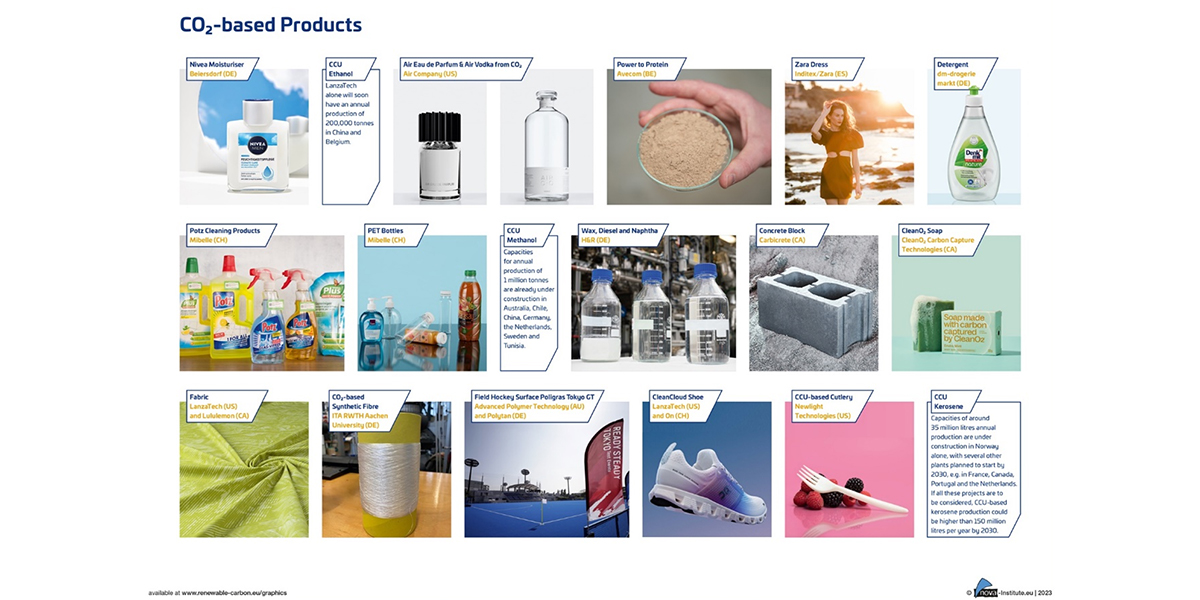
Figure 2: Innovative CO₂-based products contribute to closing the carbon cycle and developing sustainable solutions for a low-carbon future.
Photo: © nova-institute.eu, source 20
10. Conclusion and outlook
GKT is convinced that CCU technologies will become an indispensable component of a sustainable economy in the long run. Close collaboration between stakeholders in science, industry, and politics will be crucial to establishing CCU technologies as a key element in the transition to a low-carbon economy and positioning Europe as a leader in the development of innovative CO2 reduction solutions.
As experts in separation technology with a particular focus on CO2 utilization and downstream separation processes, we are proactively committed to advancing CCU technologies. A significant milestone on this journey is our proprietary ECO2CELL technology, which is already implemented in our innovative laboratory facility. The ECO2CELL Lab Plant is available to companies for comprehensive testing and requires only CO2, water, and electricity to produce a variety of value-added products through an electrocatalytic process. GKT is also actively pursuing partnerships with research and industry partners to drive the technological evolution of CO2 electrolysis and other application areas.
The time to act is now, and the course for a low-carbon future must be set today. If you are interested in collaborating with us, we would be delighted to hear from you!
Learn more and download our CO2 valorization WHITEPAPER:
Learn how valuable side streams from sulfite liquor can be recovered and transformed into marketable products.

Sources:

1 Mohammad Rezaei, M. B. A. (2023). CO2-utilization: 5 reasons why companies should participate now. gkt-solutions.com. Retrieved on June 26, 2023.

2 Mohammad Rezaei, M. B. A. (2023). CO2-electrolysis: technical-economic analysis of the technology and marketable CO2-products. gkt-solutions.com. Retrieved on July 9, 2023.

3 A new era for CCUS. iae.org. Retrieved on June 30, 2023, from https://www.iea.org/

4 Carbon Capture and Storage. (2024). Umweltbundesamt. Retrieved on October 14, 2024, from https://www.umweltbundesamt.de/

5 Biniek, K., Di Fiori, L., Liffey, R., Segel, N., & Stackhouse, B. (2024). Global energy perspective 2023: CCUS outlook. Mckinsey.com; McKinsey & Company. Retrieved on October 14, 2024, from https://www.mckinsey.com/

6 Accelerating deployment – CCUS in Clean Energy Transitions – Analysis. (n.d.). IEA. Retrieved on October 14, 2024, from https://www.iea.org/

7 Kaser, G..6. IPCC-Sachstandsbericht (WG II & III): Pressekonferenzen (February & April 2022). Ccca.ac.at. Retrieved on July 26 2023, from https://ccca.ac.at/

8 Whitehouse introduces legislation to create parity between captured carbon utilization and sequestration. (2023). Senate.gov. Retrieved on November 12, 2023, from https://www.whitehouse.senate.gov/

9 Clean energy tax provisions in the Inflation Reduction Act. (2023). The White House. Retrieved on November 12, 2023, from https://www.whitehouse.gov/

10 Abramson, N., & Lieberman, J. (2023). Update: 2023 CCUS legislation. The Energy Law Blog. Retrieved on November 12, 2023, from https://www.theenergylawblog.com/

11 Recent Chinese policy announcements will help facilitate deployment of low carbon technologies, including CCUS. (2024). Global CCS Institute. Retrieved on October 14, 2024, from https://www.globalccsinstitute.com/

12 Asia CCUS Network. Asiaccusnetwork-eria.org. Retrieved on October 14, from https://www.asiaccusnetwork-eria.org/

13 First Step to Launch Japanese CCS Project- JOGMEC selected 7 projects, starting CO2 storage by FY2030. (o. J.). JOGMEC. Retrieved on October 14, from https://www.jogmec.go.jp/

14 Cabinet Approvals on the “Bill for the Act on Promotion of Supply and Utilization of Low-Carbon Hydrogen and its Derivatives for Smooth Transition to a Decarbonized, Growth-Oriented Economic Structure” and the “Bill for the Act on Carbon Dioxide Storage Businesses (2024). Meti.go.jp. Retrieved on October 14, from https://www.meti.go.jp

15 Press corner. European Commission. Retrieved on June 30, 2023, from https://ec.europa.eu/

16 Budgetrede 2023: Brunner will Verantwortung für morgen übernehmen. (2022). Parlament.gv.at. Retrieved on July 7, 2023, from https://www.parlament.gv.at/

17 Nationaler Energie- und Klimaplan. Bmk.gv.at. Retrieved on July 7, 2023, from https://www.bmk.gv.at/

18 Support stakeholders on Carbon Capture Utilisation and Storage of ETIP ZEP and IWG9. (2022). Europa.eu. Retrieved on August 8, 2023, from https://cordis.europa.eu/

19 Zero Emissions Platform. Retrieved on November 12, 2023, from https://zeroemissionsplatform.eu/

20 Renewable-carbon.eu. Retrieved on November 12, 2023, from https://renewable-carbon.eu/